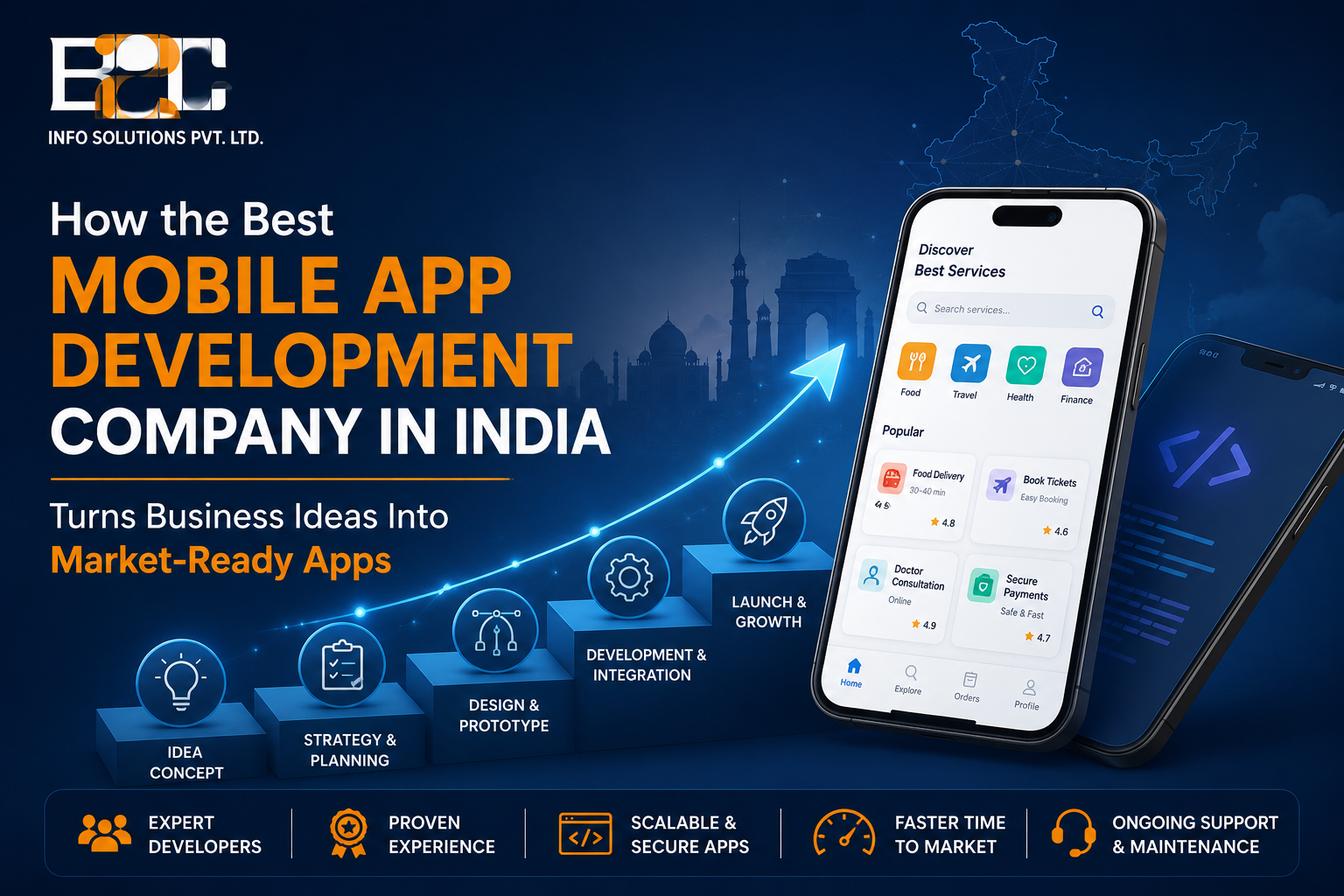
Most mobile app ideas never make it to a successful launch. Not because the idea was weak, but because the distance between a concept on a whiteboard and a stable, scalable product in the app store is far greater than most founders expect. Market research, design decisions, engineering tradeoffs, and post-launch iteration all shape whether an idea becomes a business asset or a shelved project.
This is why partnering with an experienced Mobile App Development Company India has become a defining factor in whether a business idea reaches the market at all, let alone succeeds once it gets there. The right partner brings structure to a process that otherwise relies on guesswork.
This article walks through that journey, from validating an idea to designing, building, launching, and continuously improving a mobile application, and what to look for in a development partner along the way.
A business idea is not the same as a product plan. Founders often arrive with a clear picture of what they want to build but little clarity on sequencing, technical feasibility, or what a first version should actually include. An experienced partner translates that vision into a structured plan with defined milestones and realistic scope.
Rebuilding a mobile app after launch, because the architecture could not scale or the technology choice was wrong for the use case, is far more expensive than getting those decisions right the first time. Many of the most costly mistakes in mobile development happen in the first few weeks of planning, long before a line of code is written.
Users compare every new app against the best apps they already use, regardless of industry or budget. A development partner who understands current user expectations around speed, design, and functionality helps a founder avoid building something that feels dated the moment it launches.
Before development begins, a serious partner investigates the competitive landscape, target audience behavior, and existing alternatives. This research shapes decisions about positioning and feature scope long before design work starts, and often reveals gaps or risks a founder had not considered.
Not every feature on a founder's wish list belongs in the first release. Prioritization frameworks that weigh business value against development effort help teams focus on the features that will actually move adoption and retention, rather than the features that simply sound impressive in a pitch deck.
A minimum viable product is not a stripped-down version of the final vision. It is a focused release designed to test the core assumption behind the business idea with real users, as quickly and affordably as possible, so that the next round of investment is guided by evidence rather than opinion.
Strong user experience design starts with understanding how a target user actually moves through a task, not with visual polish. Mapping user flows before any screens are designed prevents the common problem of an app that looks attractive but confuses people the moment they try to use it.
Visual design should reinforce usability rather than compete with it. Consistent typography, spacing, and interaction patterns reduce cognitive load and help users complete tasks without thinking about the interface itself, which is the goal of genuinely good design.
Features built around a real customer problem, rather than a competitor's feature list, tend to drive stronger engagement. Usability, accessibility, and intuitive design directly affect how long a user stays with an app after the first few sessions, which is often the clearest predictor of long-term retention.
Choosing between native development, Flutter, or React Native has long-term consequences for performance, development speed, and maintenance cost. A retail app expecting rapid growth across multiple markets, for example, has very different technical needs than an internal enterprise tool used by a few hundred employees.
Applications that perform reliably under real-world load, and that protect user data through proper encryption and access controls, retain user trust in ways that flashy features cannot replace. Security should be built into the architecture from the start, not added as a patch before launch.
A well-architected app anticipates future needs such as payment gateways, third-party APIs, or new platform support, even if those features are not part of the initial release. Planning for this flexibility early avoids expensive rework when the business is ready to grow.
Structured testing across devices, operating systems, and network conditions catches problems before users do. Skipping thorough quality assurance to meet a launch date is one of the most common reasons apps launch with the kind of bugs that drive early uninstalls.
Successful app store submission requires more than technical readiness. Metadata, screenshots, and compliance with platform guidelines all influence discoverability and approval speed, and mistakes here can delay a launch by days or weeks.
Operating systems, devices, and third-party libraries change constantly. Regular maintenance keeps an app compatible and secure, and prevents the slow accumulation of technical debt that eventually forces a costly overhaul.
Apps that continue to evolve based on real usage data and user feedback consistently outperform those that treat launch as the finish line. Continuous improvement is what separates apps with lasting relevance from apps that fade after an initial wave of downloads.
Review past projects for relevance to your industry and product complexity, not just visual polish. A partner with direct experience in a similar domain will anticipate challenges that a generalist team might miss entirely.
Ask about specific technologies used, how the team approaches architecture decisions, and how they have handled past performance or scaling challenges. Concrete answers matter far more than a long list of claimed capabilities.
Clear reporting, predictable check-ins, and honest updates on setbacks are strong indicators of how a partner will behave once a contract is signed. This kind of custom mobile app development services relationship depends on transparency from the very first conversation.
Understand how the team manages sprints, handles scope changes, and validates progress. A disciplined, visible process reduces the risk of missed deadlines and unpleasant surprises late in the project.
Confirm what support looks like after launch, including monitoring, bug fixes, and how quickly issues get addressed. A partner without a clear post-launch plan is planning to disappear right when ongoing support matters most.
The strongest relationships extend well beyond the first release, with the development team acting as an ongoing product partner rather than a vendor hired for a single project. This mobile application development services approach supports sustained growth across multiple product cycles.
Turning a business idea into a market-ready app depends on far more than good intentions and a clear vision. It depends on disciplined validation, thoughtful design, sound technical architecture, and a genuine commitment to improvement long after launch day. Every one of those elements is shaped by the development partner chosen at the start.
Working with the right team, one that treats planning, execution, and post-launch support with equal seriousness, is what consistently separates apps that thrive from apps that quietly disappear. Businesses ready to explore what a well-structured digital product development process could look like for their idea are welcome to contact our mobile app experts for a conversation about the path forward.
Timelines vary based on complexity, but a focused MVP typically takes three to five months from planning through launch, while a more feature-rich enterprise application can take six months or longer. Factors such as design complexity, third-party integrations, and the number of supported platforms all influence the overall timeline significantly.
An MVP, or minimum viable product, is a focused first version of an app built to test the core business assumption with real users. It includes only the essential features needed to validate demand, allowing a business to gather feedback and make informed decisions about future investment before committing to a fully featured build.
India offers a large pool of experienced mobile development talent, competitive development costs compared to many other regions, and teams accustomed to working with international clients across time zones. This combination allows businesses to access strong technical expertise and structured product development processes without the overhead often associated with in-house teams.
Author Bio
JS Tomar is the Global Business Head at B2C Info Solutions, a premium digital technology company that has delivered over 1000+ web and mobile projects worldwide. With a deep background in strategic formulation and product engineering, he specializes in helping businesses leverage AI, cloud, and experience design to build disruptive software solutions. Based in Noida, JS is dedicated to nurturing a culture of excellence and delivering high-value digital transformations for clients across North America, Europe, and the Middle East.

 4 North
  52 Cornmarket
  C-25, C Block, 91springboard
 #02 - 161 IMM Building